
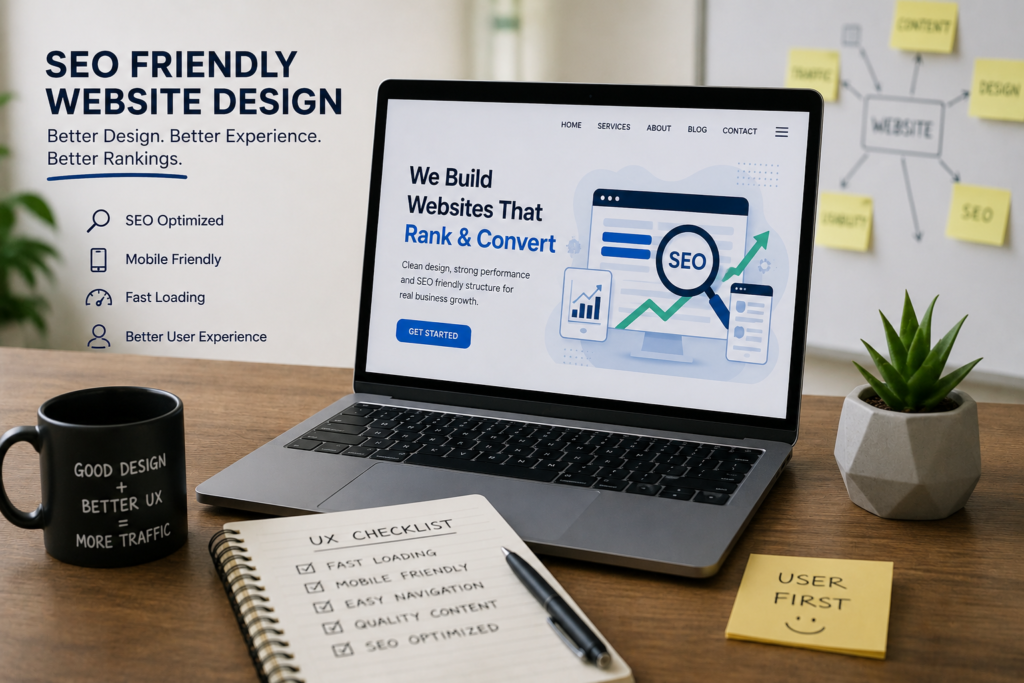
Creating a beautiful website is great, but if visitors leave within seconds, even the fanciest design becomes useless. That’s why businesses today focus on seo friendly website design to improve both user experience and search engine rankings.
A good website should not only look attractive but also load fast, work smoothly on mobile devices, and help users find information easily. Modern businesses understand that seo friendly website design is one of the biggest factors behind online growth, better engagement, and higher conversions.
Think about it this way — if a website takes forever to load, users disappear faster than salary after online shopping sales.
So, let’s explore the best tips for creating a better website experience while improving your seo friendly website design strategy.
1. Keep Your Website Design Simple
One of the biggest mistakes businesses make is adding too many elements to their website. A clean and simple seo friendly website design improves readability and user experience.
Users should easily understand:
- What your business offers
- Where to click
- How to contact you
- How to navigate pages
Minimal designs often perform better because visitors are not overwhelmed with unnecessary distractions.
2. Improve Website Loading Speed
Website speed is extremely important for both SEO and user experience. A slow website negatively affects your seo friendly website design because search engines prefer fast-loading pages.
Ways to improve speed include:
- Compressing images
- Using lightweight themes
- Reducing unnecessary plugins
- Optimizing code
Nobody enjoys waiting for a slow website. People barely wait for elevators these days.
3. Make Your Website Mobile Friendly
Today, most users browse websites through smartphones. That’s why mobile optimization is a major part of seo friendly website design.
A responsive website automatically adjusts to different screen sizes and improves customer experience on mobile devices.
Benefits include:
- Better readability
- Improved engagement
- Lower bounce rate
- Higher search rankings
Search engines like Google also prioritize mobile-friendly websites in rankings.
4. Use Clear Navigation Menus
Complicated navigation confuses users quickly. A good seo friendly website design always includes simple and organized menus.
Visitors should easily find:
- Services
- Contact pages
- Blog sections
- Product categories
Easy navigation improves user experience and encourages visitors to stay longer on your website.
5. Focus on SEO Optimized Content
Content plays a huge role in seo friendly website design. Even the best-looking website cannot rank properly without optimized content.
Good SEO content should include:
- Relevant keywords
- Proper headings
- Internal linking
- Readable formatting
Businesses that regularly publish blogs and optimized pages usually perform better in search results.
Because search engines love useful content almost as much as people love free WiFi.
6. Add Strong Call-to-Action Buttons
Every website should guide users toward action. Whether it’s contacting your business, making a purchase, or subscribing to emails, call-to-action buttons are essential for effective seo friendly website design.
Examples include:
- Contact Us
- Get Started
- Shop Now
- Book a Consultation
Clear CTAs improve conversions and help users take the next step easily.
7. Use High-Quality Images
Visual content improves website engagement significantly. Professional images make your seo friendly website design look more trustworthy and attractive.
However, large images should always be optimized properly to avoid slowing down website speed.
Good visuals help businesses:
- Improve branding
- Increase engagement
- Build trust
- Enhance user experience
Just avoid blurry images from 2012 that look like they were taken using a calculator camera.
8. Improve Website Security
Website security is another important factor in seo friendly website design. Users trust websites that are secure and protected.
An SSL certificate helps create a secure connection between users and websites. Search engines also prefer secure websites in rankings.
Security improvements include:
- HTTPS encryption
- Regular updates
- Secure hosting
- Strong passwords
A secure website improves both SEO performance and customer confidence.
9. Optimize Internal Linking
Internal linking helps users navigate your website while improving SEO structure. A strong internal linking strategy supports better seo friendly website design by connecting related pages together.
For example:
- Linking blogs to service pages
- Connecting related articles
- Adding navigation links
Internal links help search engines understand website structure and improve page indexing.
10. Keep Updating Your Website Regularly
An outdated website can reduce trust and rankings. Businesses should regularly update their seo friendly website design with fresh content, updated visuals, and improved functionality.
Regular updates help:
- Improve SEO performance
- Increase user engagement
- Fix technical issues
- Maintain modern design standards
Websites that stay active usually perform better than websites abandoned like unfinished New Year resolutions.
Why SEO Friendly Website Design Matters
A strong seo friendly website design improves both search engine rankings and customer experience. Businesses that combine SEO with user-focused design usually attract more traffic and generate better conversions.
Benefits include:
- Better Google rankings
- Improved user engagement
- Higher conversion rates
- Increased website traffic
- Stronger online credibility
Good website design is not only about appearance — it’s about functionality, speed, SEO, and user satisfaction.
Learn More About Website Optimization from HubSpot
If you want to improve your website further, HubSpot provides useful resources related to website optimization, SEO, content marketing, and user experience strategies.
Learning modern website techniques can help businesses create stronger digital experiences for customers.
Final Thoughts
A successful website is not just visually attractive — it should also deliver excellent user experience and strong SEO performance. That’s why businesses today invest heavily in seo friendly website design to improve visibility, engagement, and conversions.
From mobile optimization and faster loading speed to quality content and clear navigation, every small improvement helps create a better website experience.
In today’s competitive digital world, businesses with strong seo friendly website design strategies usually stay ahead and build long-term online success more effectively.